The University of Caloocan City
A public-type local university established in 1971, dedicated to providing quality and globally competitive education for Caloocan residents.
Established
Students
Campuses
Free Tuition
Our History
A journey of excellence and growth
Brief History and Statement of Institutional Purpose
1971 - The Beginning
On July 1, 1971, the Secretary of Education authorized the first-year operation of the proposed Caloocan City Community College. Municipal Ordinance No. 1495 appropriated P23,400 to support the national development goal of maximizing participation in attaining and benefiting from economic progress while providing quality educational opportunities to its indigent but deserving constituents.
1972-1973 - Expansion
To address the increasing demand for education, the College was authorized in June 1972 to open a second year of the general education course and a one-year secretarial course. On June 7, 1973, the Secretary of Education approved the third-year operation of Bachelor of Science in Industrial Education and Bachelor of Science in Business Technology programs.
1975 - Polytechnic Status
The urgent and fast-growing demands of education led to the passage of Ordinance No. 2295 on March 25, 1975, which declared the institution as Caloocan City Polytechnic College.
1996-2000 - Growth Period
As the population grew, in June 1996, the Buena Park and Camarin Annexes became operational. By 2000, with the construction of new buildings, the College had 3,600 enrollees.
2004 - University Status
Building on this success, Municipal Ordinance No. 0379 paved the way for Caloocan City Polytechnic College to achieve University status. On February 9, 2004, it was officially proclaimed as the University of Caloocan City (UCC).
2013-Present - Modern Era
Under the supervision and direction of Mayor Oscar "Oca" Malapitan, UCC has focused on making education accessible to the youth. His statement, "Sa Caloocan, walang batang maiiwan sa larangan ng edukasyon," reflects the programs and projects he initiated towards providing quality and globally competitive education for Caloocan residents. In 2022, under Mayor Dale Gonzalo "Along" Malapitan, UCC continues to progress as it explores other opportunities for the "Batang Kankaloo."
Construction of North and South Campuses
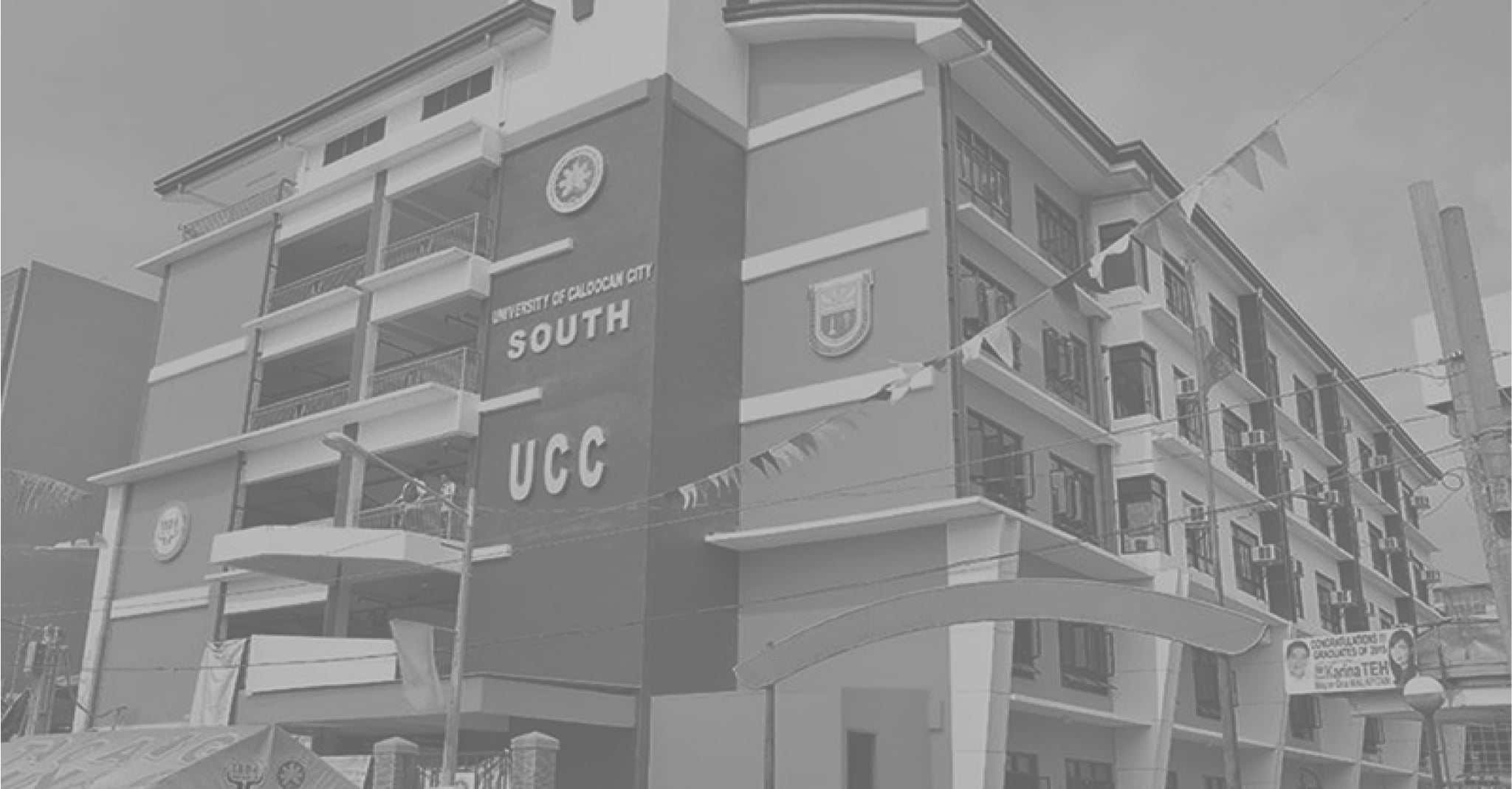
Mayor Oca transformed UCC-South Campus into a newly constructed facility, now known as the Biglang Awa Campus. To meet the educational needs of the northern part of the city, he also initiated the construction of the Camarin Campus. In addition to his Mega Infrastructure Projects, Mayor Oca established the North-Congressional Extension Campus, creating a lasting impact on the New UCC.
Upgraded School Facilities
To support innovation and provide state-of-the-art facilities for students and personnel, the city government constructed an additional 4-storey building for the UCC Camarin Extension Campus. Continuing the support of the local government, Mayor Along Malapitan's term has further fortified the foundation of the New UCC.
100% Free Tuition
Following City Ordinance No. 0053, series of 2014, qualified and deserving Caloocan residents enjoy free education, while selected scholars continue to receive financial assistance every semester.
Increase in the Number of Students
Starting with only forty-two (42) students in 1971, UCC had over 13,000 students by 2022. With the trust and confidence of the community, UCC continues to provide quality, affordable, and competitive education.
Graduation at the Mall of Asia Arena
Recognizing the accomplishments and triumphs of students, as well as parents, guardians, and benefactors, UCC has held its annual graduation rites at the Mall of Asia Arena since 2017 with the rental fees for this prestigious venue sponsored by the Office of the City Mayor Along Malapitan.
Licensure/Board/Bar Examinations Performance
Licensure Examination for Teachers (LET)
UCC's success is reflected in its alumni's exceptional performance. Both Secondary and Elementary levels consistently surpass the national average.
Certified Public Accountant (CPALE)
UCC consistently achieves passing rates above the national average, with notable topnotchers including Patrick Jefferson (Top 9, 2018) and Ronald Macasero (Top 5, 2019).
BAR Examination
The College of Law has consistently achieved significant milestones with remarkable passing rates of 83.33% in 2022, 61% in 2023, and an impressive 87.50% in the first half of 2024.
Professional Memberships
The University of Caloocan City is proud to be a recognized member of esteemed organizations that promote excellence in education and professional development:
Mission
A local government university with global quality of education imbued with desired knowledge, skills, and values for academic excellence, professional development, civic consciousness, resilient citizenry, technological advancement, ecological sustainability and continual improvement.
Vision
To develop academically excellent, professionally progressive, industry sensitive, environmentally and technologically conscious, globally competitive and resilient graduates through quality instruction, functional co-curricular activities, responsive community immersion programs, intensive research and development and continually improved quality management system molding them to become effective social and cultural agents of change.
Our Goals
Enhance pedagogical and professional competence of faculty members
Design programs for community development and environmental consciousness
Strengthen connection between University linkages and extension services
Maximize individual full potentials in culturally diverse environments
Create immersion programs for increased self-esteem and resiliency
Intensify students' engagement in academic and co-curricular endeavors
Be research-oriented and globally responsive
Inculcate values promoting academic excellence and love of country
Provide state-of-the-art facilities and equipment